
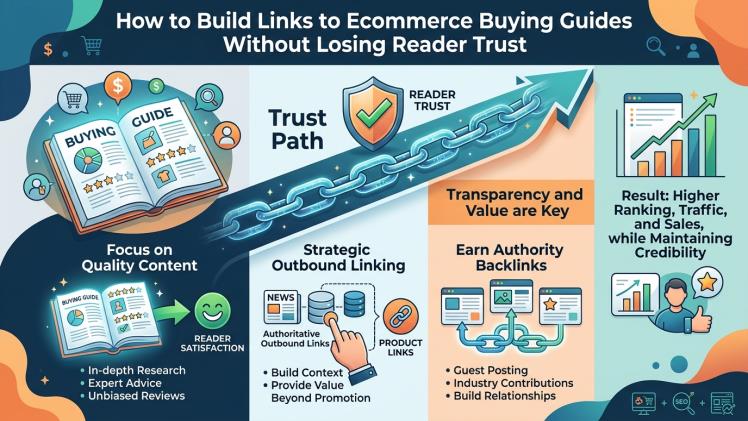
A useful buying guide can help shoppers make sense of a crowded product category, whether they are comparing skincare, supplements, or wellness products. It can also attract links from websites that want to point readers toward clear, reliable information. Learning how to build links to ecommerce buying guides starts with creating something worth citing, then making it easy for the right people to discover and use it.
Why Buying Guides Can Earn Links
Product and category pages usually focus on selection, features, and purchasing. A buying guide has room to answer broader questions: what to compare, which details matter, and how to choose based on individual needs. That makes it useful to bloggers, journalists, industry publications, and community sites looking for a helpful resource to share.
In health and wellness categories, accuracy and restraint matter especially. Explain product terms, describe how shoppers can assess quality, and distinguish general information from medical advice. Avoid unsupported health claims or language that implies one product is right for everyone. A guide that respects readers’ judgment is more likely to be trusted—and cited.
Build a Guide People Want to Reference
Start with real questions
Use customer-service conversations, product reviews, search suggestions, and discussions in relevant communities to identify where shoppers get stuck. A guide about choosing a wellness product, for example, might explain how to read a label, compare formats, or understand what information a seller provides. Keep the scope focused enough to answer those questions thoroughly.
Make the information easy to verify
Define unfamiliar terms and explain the basis for comparisons. Where a statement relies on research or official guidance, identify that context clearly in the guide itself. Do not present personal opinions as established facts. Include a publication or review date when details may change, and revisit the page when products, rules, or industry guidance shift.
Use a clear structure
Readers and potential linking sites should be able to find the answer they need quickly. Use descriptive headings, concise explanations, comparison tables where they genuinely help, and a short summary of key decision points. Original illustrations or a simple checklist can make a guide more useful, but they should clarify the information rather than decorate it.
How to Build Links to Ecommerce Buying Guides
Identify relevant publishers
Make a list of websites whose audiences would benefit from the guide: specialist blogs, consumer publications, professional associations, and local or topic-focused media. Review what each site actually covers before reaching out. A relevant, specific suggestion is more valuable than a mass email that asks unrelated sites to link to a page.
Offer a useful reason to share it
When contacting an editor or writer, explain briefly what the guide covers and which reader question it answers. If it adds a practical checklist, a transparent comparison method, or an explanation missing from an existing article, point that out. Keep the message factual and courteous, and let the recipient decide whether it fits. Avoid asking for a link in exchange for payment or implying that coverage is required.
Contribute expertise, not just a URL
Answer requests for expert commentary, write a genuinely useful guest contribution, or provide an original data point that a publisher can use. These approaches take more effort than sending a link request, but they give the publisher something of value. Any contribution should stand on its own; the guide should be linked only when it adds context for readers.
Update and promote the resource
Share a new guide through existing customer communications and appropriate social channels. If you revise it substantially, let relevant contacts know what has changed rather than repeatedly sending the same pitch. Review inbound links periodically and check whether they come from pages that still make sense for your audience.
When Outside Help Makes Sense
Research, writing, outreach, and measurement each call for different skills. A store owner may handle subject expertise in-house while bringing in freelance support for editing, design, or campaign planning. Before delegating, set a clear brief: target readers, claims to avoid, deliverables, timeline, and how success will be assessed.
If you are considering this route, it can help to understand what a freelance digital marketer does and which parts of a campaign that person may handle. Osdire, for example, is a marketplace where buyers can hire freelancers across areas such as writing, design, and marketing. Its order process holds payment while work is underway and releases it after the buyer approves delivery, which gives both sides a defined workflow. Whatever platform you use, agree on scope and review standards before work begins.
Measure More Than Link Counts
Track which sites link to the guide, whether those pages are relevant, and whether visitors arrive from them. Also look at engagement: do readers continue to useful product information, or leave because the guide does not match their needs? Link totals alone cannot tell you whether the resource is helping people or supporting the wider store experience.
For additional approaches to product- and category-page outreach, see this overview of ecommerce link building. Apply its ideas selectively: a buying guide should earn attention through usefulness, not through tactics that compromise editorial independence.
Conclusion
Strong links tend to follow from strong resources. Answer real shopper questions, make your information easy to assess, and approach relevant publishers with a clear reason the guide may help their readers. Keep claims careful, update the content as circumstances change, and judge progress by relevance and reader value as well as by the number of links. That approach gives an ecommerce buying guide a better chance of becoming a resource people choose to cite.